

If you are getting into cryptocurrency for the first time, there is a good chance the word wallet is one of the first things you’ll hear.
“Get a wallet.”
“Send it to your wallet.”
“Connect your wallet.”
“Not your keys, not your coins.”
It sounds straightforward until you realize that a crypto wallet doesn’t actually hold your cryptocurrency in the way a physical wallet holds cash.
So what exactly is it doing?
The answer becomes much easier once you understand three things:
wallets, addresses, and private keys.
Let’s take them one at a time.
What is a crypto wallet?
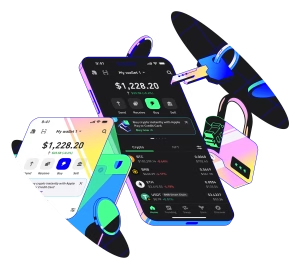
A crypto wallet is a tool that allows you to manage and interact with cryptocurrency stored on a blockchain.
It can be an app on your phone, a browser extension, a desktop application, or a physical hardware device.
The important part is this:
Your cryptocurrency isn’t sitting inside the wallet.
The blockchain contains the records of ownership and transactions.
Your wallet manages the cryptographic information that lets you interact with those assets.
Ethereum’s documentation describes wallets as applications that let users manage accounts and interact with the Ethereum network. (ethereum.org)
This is one of those concepts that sounds strange at first.
If you uninstall a wallet app from your phone, you haven’t automatically deleted your Bitcoin or ETH.
What matters is whether you still have access to the keys needed to control the associated assets.
That’s why wallet backups are so important.
What is a crypto address?
A crypto address is essentially a destination for receiving cryptocurrency.
For example, someone can give you their Ethereum address and you can send ETH to it.
An Ethereum address typically looks something like:
0x...
A Bitcoin address has different formats depending on the type of address.
The important thing is that different blockchain networks use different address systems.
An Ethereum address isn’t automatically a Bitcoin address.
And sending an asset to the wrong network or incompatible address can result in the loss of funds.
This is why experienced crypto users tend to double-check addresses before sending transactions.
What is a private key?
Now we’re getting to the really important part.
A private key is a secret piece of cryptographic information that gives you the ability to authorize transactions from an account.
If your wallet address is something you can give to other people, your private key is something you should keep secret.
Think of it this way:
Public address → people can use it to send you crypto.
Private key → used to authorize transactions.
Anyone who obtains your private key may be able to control the assets associated with it.
That’s why you should never casually share your private key or recovery phrase with someone claiming to be “support.”
A legitimate wallet provider should not need your secret recovery phrase to help you with a normal issue.
What is a seed phrase?
You will often hear another term when setting up a wallet:
seed phrase.
It’s usually a sequence of words generated by the wallet.
Depending on the wallet and standard being used, it may contain 12, 18 or 24 words.
The seed phrase is extremely important because it can be used to regenerate the keys associated with a wallet.
In simple terms, think of it as a master backup.
If your phone breaks and you’ve properly backed up your wallet’s recovery phrase, you may be able to restore access using another compatible wallet.
But there is a dangerous side to this convenience.
Anyone who gets your recovery phrase may be able to gain control of your funds.
That means your seed phrase should be treated as highly sensitive information.
Don’t send it through WhatsApp.
Don’t store it in a random screenshot.
Don’t paste it into a website because someone told you that you need to “verify your wallet.”
And never give it to someone who contacts you unexpectedly claiming to be wallet support.
Hot wallets vs cold wallets
Crypto wallets are commonly divided into two broad categories:
Hot wallets
and
Cold wallets.
The difference is basically about connectivity.
Hot wallets
A hot wallet is connected to the internet.
Examples include mobile wallets and browser-extension wallets.
They’re convenient.
You can install one, connect to a decentralized application and sign a transaction within minutes.
That convenience is exactly why they’re popular.
But being connected to the internet also exposes you to more potential threats.
Malicious websites, phishing attacks, fake wallet applications and compromised devices can all create risks.
Cold wallets
A cold wallet is designed to keep private keys offline or otherwise isolated from an internet-connected environment.
Hardware wallets are the most common example.
They are often used by people who want stronger protection for larger or longer-term holdings.
That doesn’t make them completely immune to scams.
A hardware wallet can protect your keys from certain online threats, but it can’t stop you from voluntarily approving a malicious transaction or entering your recovery phrase into a fake website.
The device is only part of the security equation.
Custodial vs non-custodial wallets
There’s another distinction that matters even more:
Who controls the private keys?
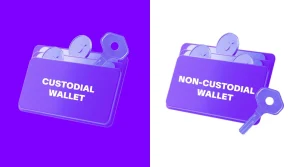
With a custodial service, another company controls the keys on your behalf.
This is commonly how centralized cryptocurrency exchanges work.
You log into your account with an email and password, and the platform manages the underlying blockchain keys.
This can be convenient, especially for beginners.
But you’re trusting the company to protect your assets and give you access to them.
With a non-custodial wallet, you control the keys yourself.
This gives you more direct ownership and control.
But it also means there’s nobody else responsible for recovering your keys if you lose them.
That’s the trade-off.
More control generally means more responsibility.
What does “not your keys, not your coins” mean?
You’ve probably seen this phrase everywhere in crypto.
It isn’t just a catchy slogan.
The phrase refers to custodial ownership.
If an exchange or another service controls the private keys associated with your assets, you’re relying on that service to honor your claim to those assets.
If you withdraw your crypto into a wallet where you control the private keys, you have direct control over the assets.
Neither approach is automatically perfect.
Keeping assets on an established exchange can be convenient.
Self-custody can give you greater control.
But self-custody also means you become responsible for your own security.
There’s no “forgot password” button for a lost private key.
Can you have more than one wallet?
Absolutely.
In fact, many crypto users eventually use several.
You might have:
- A wallet for everyday transactions
- A hardware wallet for long-term holdings
- A separate wallet for interacting with experimental applications
- An exchange account for buying and selling
There is no rule saying one person must have one wallet.
The important thing is understanding which wallet controls which keys and where your assets actually are.
Why do crypto addresses look so complicated?
A traditional bank account number is designed for humans to read.
Crypto addresses aren’t really designed that way.
They’re generated using cryptographic systems and are intended to uniquely identify destinations or accounts on a blockchain network.
That’s why they can look like random strings of letters and numbers.
This also creates a practical problem.
If you type an address incorrectly, you might send your crypto somewhere you didn’t intend to.
Some wallets and blockchain networks provide address-book features, QR codes, address validation or other tools to reduce mistakes.
Still, it’s worth checking before confirming a transaction.
What happens when you send crypto?
Let’s say you want to send ETH to another person.
You enter their Ethereum address into your wallet.
You specify how much ETH you want to send.
Your wallet creates the transaction and signs it using the relevant private key.
The transaction is then broadcast to the Ethereum network.
Validators process it according to Ethereum’s rules.
If the transaction is included in a block and confirmed, the blockchain’s state is updated.
Your wallet doesn’t physically “move” the ETH from one phone to another.
Instead, the blockchain records that the ETH is now controlled by the receiving address.
That distinction is subtle but important.
What happens if you lose your phone?
This is one of the first questions new wallet users should ask.
If you lose your phone but still have your wallet’s recovery information, you can generally restore the wallet using compatible wallet software.
If you lose both your device and the recovery information, things become much more serious.
This is why setting up a wallet isn’t simply:
Download app → create wallet → done.
You should also understand how the wallet can be recovered before you start putting meaningful amounts of cryptocurrency into it.
Ethereum specifically recommends backing up a wallet’s recovery phrase and keeping it offline and secure. (ethereum.org)
What happens if someone gets your seed phrase?
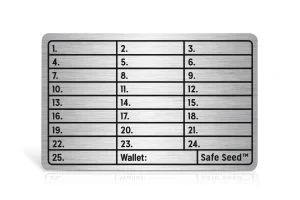
This is the opposite problem.
If someone gets access to your seed phrase, they may be able to restore your wallet on another device.
They don’t need your phone.
They don’t need your password.
And they don’t need physical access to your computer.
This is why scams involving seed phrases are so common.
Imagine someone messages you:
“Your wallet has been compromised. Send us your recovery phrase so we can secure it.”
Stop.
That’s a huge warning sign.
You should never hand over your recovery phrase because someone contacted you claiming that your funds are at risk.
The safest response is to leave the conversation and verify everything through the wallet provider’s official channels.
Can a wallet hold different cryptocurrencies?
Sometimes.
But this is where beginners need to be careful.
A wallet application may support multiple blockchain networks and assets, but that doesn’t mean every cryptocurrency can be sent to every address.
For example, Ethereum-based assets and Bitcoin operate on different networks.
Some wallets support both.
Others don’t.
Even when a wallet interface allows you to select an asset, you still need to make sure you’re using the correct network when sending it.
A transaction sent through the wrong network can create serious problems.
Before sending cryptocurrency for the first time, always check:
Which asset?
Which network?
Which address?
Are there any network or transaction fees?
Those four checks can prevent some very expensive mistakes.
What is a hardware wallet?
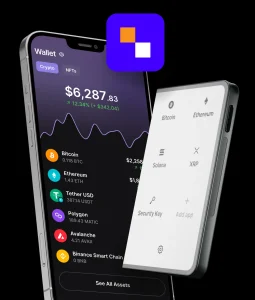
A hardware wallet is a physical device designed to protect your private keys while allowing you to sign transactions.
The basic idea is simple.
Instead of keeping your keys directly on an internet-connected computer, the hardware wallet keeps sensitive key operations inside a dedicated device.
You can connect the device when you need to authorize a transaction.
This can provide stronger protection against certain types of malware and online attacks.
But don’t think of a hardware wallet as a magic box that makes crypto theft impossible.
If you reveal your recovery phrase, a hardware wallet can’t save you.
If you approve a malicious transaction, the device may simply be doing exactly what you told it to do.
Security still depends heavily on the user’s decisions.
What is wallet recovery?
Wallet recovery is the process of restoring access to a wallet using its backup information.
This is one reason seed phrases are so important.
Imagine your laptop stops working tomorrow.
If your wallet was properly backed up, you can install compatible wallet software on another device and restore access.
But there’s an important point here:
A recovery phrase isn’t something you should experiment with casually.
Don’t type it into websites.
Don’t test it by sending it to someone.
Don’t enter it into a random “wallet recovery” page you found through a search engine.
If you’re setting up a wallet, follow the wallet provider’s official instructions.
The biggest wallet mistakes beginners make
Most wallet disasters don’t happen because someone failed to understand advanced cryptography.
They happen because of simple mistakes.
People:
- Send funds to the wrong address.
- Use the wrong network.
- Store their recovery phrase carelessly.
- Enter their recovery phrase into a phishing website.
- Download fake wallet applications.
- Approve transactions they don’t understand.
- Give their private information to fake customer support.
- Keep everything in one wallet without considering security.
The good news is that most of these problems are avoidable.
You don’t need to become a cybersecurity expert.
You simply need to slow down when something involves your private keys or a blockchain transaction.
So which wallet should a beginner use?
There isn’t one wallet that is perfect for everyone.
The right choice depends on what you’re doing.
If you’re simply learning how cryptocurrency works, you may start with a reputable software wallet and a very small amount that you can afford to lose while learning.
If you’re holding significant assets for a long period, you may eventually consider a hardware wallet.
If you’re actively trading, you may use a centralized exchange.
The important thing isn’t to find the “best wallet” according to some random social media post.
It’s to understand who controls the keys, what networks the wallet supports, how recovery works, and what security responsibilities you have.
The three things you should remember
If the entire crypto wallet concept still feels like a lot, remember these three things:
Your address is for receiving.
You can share it when someone needs to send you cryptocurrency.
Your private key is for control.
It should remain secret.
Your recovery phrase is your backup.
Protect it like the keys to your house—and don’t give it to anyone who asks for it online.
Once those three ideas are clear, wallets become much less mysterious.
And now you have the basic foundation of crypto:
You know what cryptocurrency is.
You understand what a blockchain does.
You’ve seen how Bitcoin works.
You know why Ethereum is programmable.
And now you understand how wallets allow people to interact with these networks.
From here, we can start moving beyond the basics.
The next logical step is how people actually build on these networks—and that’s where blockchain development, smart contracts and Solidity come into the picture.


Leave a Reply